

Emotional Balance
Learn to trust your own feelings again
Emotions are the Foundation for Personal Unfolding
Emotional balance opens up many possibilities for creating a good life. When we are in balance, we choose paths and actions that truly suit us and therefore feel meaningful and desirable. Life becomes coherent and feels right and true.
Dreamtime meditations help restore emotional balance.
However, living in emotional balance is by no means always guaranteed. Over the course of life, some emotions are encouraged while others are suppressed. As a result, we often deny important aspects of our personality.
Women Are Raised into Emotional Imbalance in Patriarchal Societies.
Especially woman, in many cultures, learn from an early age to suppress certain feelings. For example, it is often considered undesirable for a woman to become angry. Therefore, she may lack the assertiveness she needs. Equally common is the tendency of many women to help others while putting their own needs aside. Through this self-sacrifice, many naturally meaningful feelings, thoughts, and options for action are pushed aside and cast into the shadows. The shadow life of women was powerfully described by the Jungian psychoanalyst Verena Kast.

Emotionally Too Weak in Times of Crisis
Such over-adaptation through restricting emotional experience feels normal as long as both we and our environment continue to function within it. However, when life circumstances change, a crisis may arise because our emotional “default settings” have been permanently distorted. For example, someone who cannot assert themselves and loses a person who previously represented their interests may feel overwhelmed and lost.
To resign oneself by saying, “That's just the way I am,” only perpetuates the problem. The consequences may include excessive anxiety, persistent depression, or anger and outbursts of rage triggered by even minor events. In such situations, it can be tempting to wish for a simple reset button.
These patterns are by no means limited to women. They appear in all people. However, women are particularly often affected by expectations that promote caregiving, adaptation, and self-denial. As a result, some fundamental emotional forces become unbalanced.

The Foundation of Lived Experience Lies in Emotions
In fact, it is possible to change this imbalance at its roots. Affective neuroscience has investigated the fundamental emotional processes and identified seven primary affective systems.
These basic emotions are autonomously organized because they are rooted in the brainstem—a structure shared by all vertebrates. Therefore, they operate largely outside conscious awareness. Nevertheless, they generate moods and tendencies toward action. They provide a basis for the concepts of both instincts and archetypal experiences.
The seven primary processes are:
- SEEKING (searching, exploring)
- CARE (nurturing, caregiving)
- FEAR (fear)
- PANIC/GRIEF (panic, separation distress
- RAGE (Anger)
- LUST (desire)
- PLAY (play)
Exploring (SEEKING) Is Central
The SEEKING system is considered the most fundamental of all. It enables us to become active—both during the day and at night. To motivate us to engage with the essentials and contents of our lives, exploration is internally rewarded with feelings such as anticipation, interest, and enthusiasm. This exploration is directed both outward toward the world and inward toward self-reflection.
The individual expression of these seven affective systems is so distinctive that researchers speak of endophenotypes. Our inner experience is as unique as our outward appearance. From birth, every human being possesses a unique emotional structure—a living core of personality. This idea strongly resembles Carl Gustav Jung’s concept of the Self as the organizing center of personality. Antonio Damasio refers to this original level as the proto-self.
Deviations and Normal Affective “Default Settings”
Let us consider some forms of imbalance: • People who are chronically depressed often show overactivity in the PANIC/GRIEF system. • Lack of motivation is frequently associated with an inhibited SEEKING system. • Excessive anxiety is linked to an overactive FEAR system. • People who are extremely responsible and nurturing often exhibit heightened activity in the CARE system.
These seven systems are located deep within the brainstem, well below the cerebral cortex. Together they are known as the Subcortical Midline Structures (SCMS). They are connected to the middle regions of the cerebral cortex, the Cortical Midline Structures (CMS). Together, these structures form the basis of the Default Mode Network (DMN)—our affective default settings.
Without the constant guidance of the cerebral cortex, the Default Mode Network becomes particularly active during states of rest: REM sleep, waking dreams, daydreaming, active imagination, and meditation. At birth, the DMN is already sufficiently developed for the newborn to begin engaging with the world beyond itself. The journey into consciousness begins.

Instincts and Archetypes
Many neuroscientists have come to regard instincts and archetypes as useful concepts. Neither instincts nor archetypes are rigid patterns; rather, they unfold flexibly within an affective framework.
Indigenous Wisdom and Healing Skills
Indigenous cultures understood these connections through their knowledge of human nature and life experience. As a result, they were able to use trance states and soul journeys as tools for emotional healing and support.
Affective Balance Therapy
Such possibilities have only returned to modern societies by indirect routes—through alternative healing practices, depth psychology, and neuroscience. Today, related therapeutic methods are being used successfully. One example emerging from affective neuroscience is Affective Balance Therapy (ABT).
Dreamtime Meditations open the Depths of the Unconscious
My Dreamtime meditations also fulfill essential conditions of this work during the brain’s resting states. They reduce conscious attention and allow emotional renewal to occur. Women in particular who have spent long periods adapting themselves, suppressing difficult emotions, or neglecting their own needs may find a way to reconnect with their natural emotional resources through this process.
Being held within a safe and trusting meditative space, while difficult feelings are embraced with loving compassion, enables positive emotional development. What is essential is that this development occurs on an unconscious, largely nonverbal, and simultaneously symbolic level. Holding Meditation offers a very gentle way of bringing important unconscious contents into present awareness.
Thus, I ultimately experience psychology, shamanic wisdom, and biology not as opposites, but as a harmonious interplay expressed in a practical and helpful form of self-exploration and personal unfolding.
Unfold yourself and your sphere of influence through what you love.
Restoring Emotional Balance
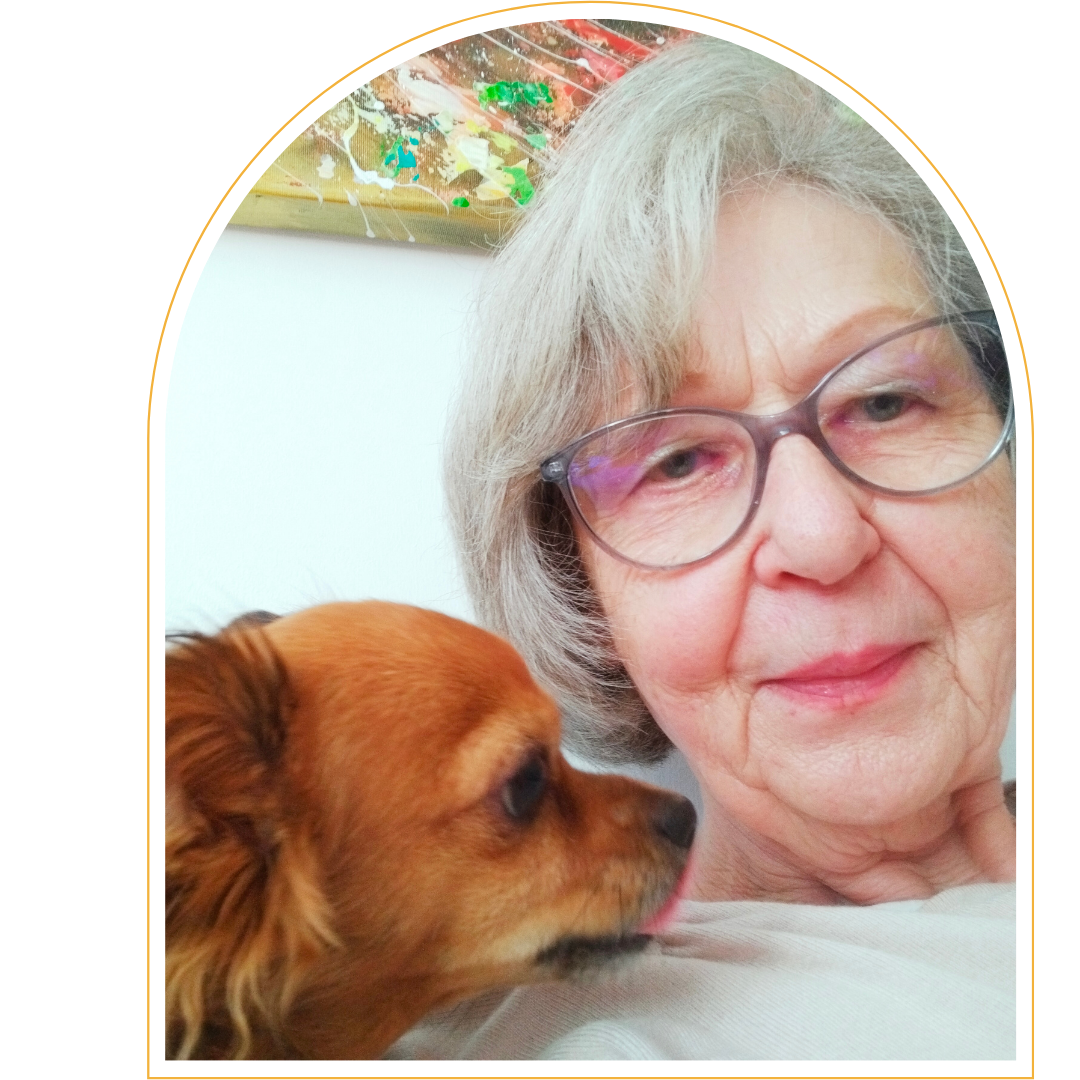
Hi, I am Ingrid Drafta
I am Ingrid and in my work I combine depth psychological Coaching (learned at Jungian Coaching School) with neo-shamanic meditations and talking practices which I studied at the Four Winds Society and the She Rising Academy. As you see here in the texts I like to combine Science and Soul Wisdom.
In our initial session you will gain clarity about how to unfold by my Coaching Program. You will get a first insight into your own emotional place now, and orientation for the development that you desire. This initial session is free, confidential and non-binding.
Start with an initial coaching session.
Blossomed: What Clients Appreciate
There will be joy and selfconfidence in your life
My clients and fellow travelers in the Talking Circles and meditations have become calmer. Their emotions flow in greater harmony. Because we have learned to find new direction through our feelings with compassion, we no longer allow ourselves to be thrown off course by the moods and whims of others. We feel freer and choose our relationships more carefully. We begin to choose—and to become—the women we want to be.
“More than anything, I value the sense of peace I have found. I live without constant anxiety and know that I can trust myself. I no longer let myself be infected by haste and panic; instead, I set healthy boundaries. As a result, my life has become more precious.”
I continue to feel compassion for others, but I don't lose myself in it. I neither fall into co-dependence nor take on someone else's feelings. My conscience has become calm because I have learned to deal with my emotions in an accepting and transformative way.
Today I treat myself to what I can afford. Give and take are in balance. I bought a horse and moved to the sea. I made dreams come true. And I have found my purpose in this life. This is simply wonderful.
Get in Contact with me!

Phone
+49 (0) 177-3333661

