
Surprised by Transformation
Why Change Often Begins Where We Become Strangers to Ourselves
Surprised by Transformation: Abstract
This essay describes a personal process of transformation from a Jungian perspective. Beginning with the surprising decision to leave a successful career in the financial industry, it explores the dynamics of the shadow, the trickster, the animus, and the heroine's journey. Through autobiographical experiences, myths, fairy tales, and psychological concepts, it becomes apparent how women often delegate unlived aspects of their personality to others and thereby live a “shadowed life.” The essay shows how reclaiming these aspects, supported by community and sisterhood, can lead to greater authenticity, self-determination, and inner vitality.

A Surprising Departure
At the age of sixty-three, I unexpectedly left my position in the financial industry. This came as a surprise not only to others, but also to myself.
For many years, I had built a career, supported people, advanced projects, and often helped others shine. Those people were very happy about it and assumed that I was as well. However, it was merely a compromise that weighed heavily on me, for how much I would have liked to shine myself.
“You've lived a completely shadowed life,” a psychologist friend explained to me.
I had handed my most luminous ambitions over to others. At best, I could bask in their reflected glow. Whenever I was kept in my place and assigned yet another superior, the experience was especially bitter. I had become highly skilled at putting on a brave face.
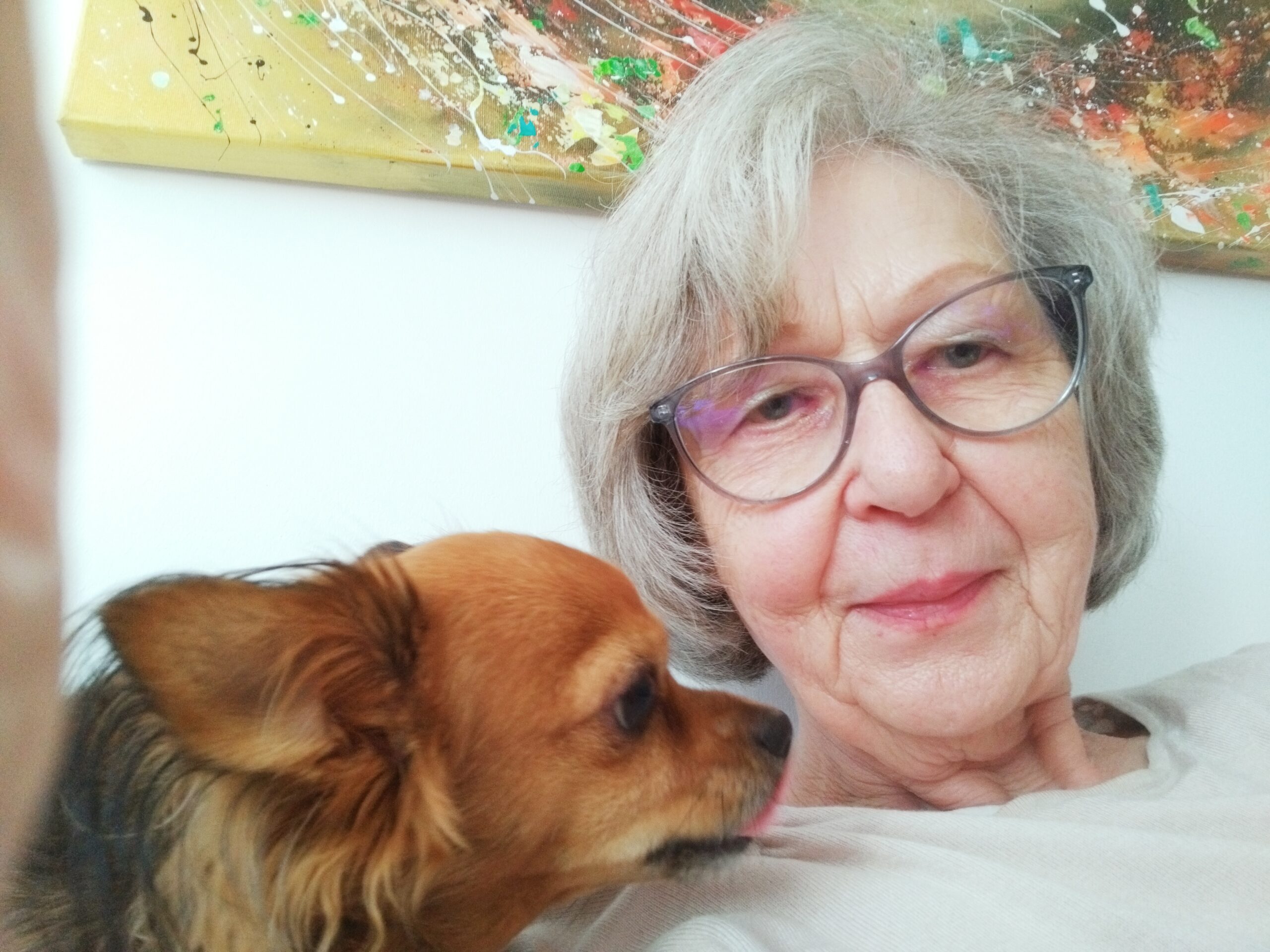
The real change did not begin with my frustration. It began with a small Chihuahua named Diva.
It pained me to leave her in dog daycare every day. Then one day I learned that she had spent the entire day confined in a bag. It was heartbreaking and filled me with outrage.
“I am changing this immediately. I am going to create a life worthy of Diva.”
It hurt my soul, and the little dog seemed to speak on behalf of my soul. In that moment, the Self announced a task of transformation.
Viewed archetypally, little Diva had entered my life as a trickster figure and messenger of the Self. She brought movement into a stagnant system and forced me to perceive new possibilities. Out of this came my resignation, a reasonable severance package, and the decision to become “my own CEO.”
Only years later did another question arise: “Why have I thought so little about myself?”

Recognizing the Shadowed Life
Many people associate the shadow with evil, with Dr. Jekyll and Mr. Hyde. And indeed, Carl Gustav Jung described the shadow as everything we do not want to be. But is that all the shadow can be? If I say that the shadow consists of everything I am not allowed to be, that is equally true. The shadow is more than evil. Jung would have agreed.
All my life I had learned to take responsibility, to be helpful, and to care for others. Yet behind these strengths lurked a shadow side: the tendency to realize other people’s lives instead of my own.
That was the true shadowing of my life—not malice, but self-forgetfulness.
Self-Forgetfulness in Myth: the Nymph Echo
An extreme example of such shadowing appears in the myth of Echo and Narcissus. The nymph Echo was cursed never to speak for herself. When she fell in love with Narcissus, she could only repeat what he had already said. Narcissus, meanwhile, was cursed to love his own reflection and no other person. Thus, he remained indifferent to Echo.
“In her grief over being invisible and non-existent to him, Echo lost her body and her voice and remained only as an echo in the mountains. Her entire existence became admiration for the masculine narcissistic principle in love with itself; she had no right to exist.” — Ruth Netzer, Maiden, Goddess, Crone. P 38/39, EBookPro Publishing, 2026 (my translation)
Ruth Netzer describes Echo as an archetypal image of a woman whose existence disappears behind admiration of the masculine. She further argues that women often display a form of narcissistic failure by handing over their natural and healthy narcissism to others. She calls this pattern the Echo-Narcissus Complex.
Female Self-Abandonment in Fairy Tales
Several fairy tales portray women who abandon themselves in a similar way.
Hans Christian Andersen’s The Little Mermaid sacrifices her voice and endures pain with every step in order to approach the prince she loves.
In Grimm’s The Seven Swans, a young girl may neither speak nor laugh for seven years if she wishes to free her enchanted brothers. Like Echo, she initially exists only for the salvation of others and relinquishes her own voice.
The Goose Girl likewise loses her identity as a princess and rightful bride when her maid forces her into a reversal of roles. Yet as the Goose Girl, the heroine develops humor, playfulness, creativity, and trust in new allies. Her personality becomes so expressive that the prince’s father overhears her story and ultimately recognizes her as the true bride.

When What is Strange Becomes a Possibility
According to Jung, the unconscious contains not only what has been repressed or forgotten; it also gives rise to new possibilities. For this reason, we repeatedly encounter something in life that initially feels strange. It belongs to us, yet it has not previously been part of our conscious identity. These are transitional periods in which our identity changes to fit a new phase of life. Familiar boundaries are crossed and the unfamiliar within us becomes integrated. It is not a simple process but complex.
Returning to my experience of leaving the financial industry:
We have already seen one such unfamiliar element: a life worthy of Diva. A second one appeared soon afterward.
A Strange Encounter in the Alleys of Frankfurt
While wandering through the streets of Frankfurt, I entered a small artisan shop and found myself standing before a saleswoman wearing a magnificent necklace. Tiny red and gold beads formed a thick spiral, resembling the scales of a snake. The necklace made her appear powerful and imposing in my eyes. I wanted one too.
The saleswoman explained that such a necklace could only be made by hand from thousands of tiny beads. I accepted the challenge. She assigned me an initial exercise, reviewed my progress a week later, and after a few weeks declared me a successful jewelry maker.
My fascination with this craft awakened a desire to show other women, through such pieces, that they could value themselves more deeply. I created necklaces for friends, colleagues, my mother, and other loved ones.
Symbols of Departure
Looking back, the saleswoman appears to me as a maternal symbol—more precisely, as an image of a strong and authoritative mother. The necklace itself, with its serpentine aspect, was clearly an Ouroboros symbol, a sign of the emerging Self. Creating individualized jewelry for colleagues, friends, and family reflected my anticipation of a new kind of community.
Thus, there were two symbols of departure into transformation:
- A life worthy of Diva
- • The art of beaded jewelry making.
They were calls from my own Self. The trickster figures—the dog and the saleswoman—had brought them out of the shadow and given them symbolic form. The animus would provide the energy necessary to embark upon the journey.
Integrating the Shadow and Taking Responsibility
Yet symbols alone do not change a life. The journey required a force capable of transforming decisions into action. Jung called this inner force in women the animus.
I had already developed many animus qualities. I was decisive, analytical, and action-oriented. What was missing was the willingness to use those capacities in service of my own life and its joyful unfolding.
The heroine’s journey requires determination, intelligence, courage, and the ability to act. Here the trickster archetype joins forces with the animus.
According to Ruth Netzer, the animus also includes the capacity to live healthy narcissistic qualities: fulfilling one’s desires, acknowledging anger, jealousy, revenge fantasies, selfishness, and aggression. The goal is not to become their victim, but to engage them consciously and skilfully.
Healthy animus energy also expresses itself through curiosity. Since women have traditionally been denied access to much learning, curiosity requires steadfastness—the courage to trust one’s own capacity to learn and to resist prohibitions against knowledge. Alice in Alice in Wonderland is profoundly curious. Through that curiosity, she ultimately disempowers the mad queen.

The Animus as Inner Authority
Looking back, I sometimes wonder whether my animus also changed. Not in the sense that I became more decisive, analytical, or capable of action. Those abilities had long been present. After all, I had spent many years in a demanding profession, taking responsibility and leading major projects.
What changed was something else: my relationship to authority.
For a long time, my life was shaped by structure, reliability, goal orientation, and excellence. Excellence did not simply mean meeting a standard. It meant striving for the very best that could be achieved within a given context. That aspiration shaped me and enabled many accomplishments.
Yet it also carried a risk. Questions such as “What is excellent?” “What is right?” or “What is professional?” were often answered according to external measures. Organizations, roles, hierarchies, and expectations provided direction. In a sense, my animus served an order that already existed.
My Life Script should be Coherent and Feel Right
Today, a different question matters more. Instead of asking, “What is the optimal solution?” I ask, “What feels true and meaningful for me?”
The capacities themselves remain unchanged. I still enjoy planning. I still value precision and mastery. Yet these capacities now serve a different center. They no longer primarily serve the requirements of an organization, but what Jung called the Self.
Perhaps this is the essence of my personal animus development: Authority shifted from the outside to the inside.
The decision to leave the financial industry did not emerge from strategic analysis. It began with a feeling, with sorrow, with compassion for my little dog Diva, and finally with the realization:
This is not how I want to live.
Out of that inner certainty came a decision. Out of that decision came action. And out of that action emerged a new chapter of life.
Today I understand the animus less as an inner disciplinarian and more as an ally of the Self. It provides energy, clarity, perseverance, and the power to implement. Yet it no longer dictates the direction. Direction arises through dialogue with the Self.
Thus, my love of excellence remained intact, but its object changed. Once I pursued professional excellence. Today I am interested in the question of how to create a fulfilled, vibrant, and “Diva-worthy” life.

New Values for a New Phase of Life
A common theme in heroine stories is that the woman leaves behind the role of victim. She does not become a perpetrator; rather, she transcends the entire victim-persecutor dynamic. She takes responsibility for her life, her decisions, and her impact on others while remaining connected to others without abandoning herself.
As a result, her relationship to power changes. Systems based on oppression lose their foundation when the potential victim rediscovers her own agency.
This shift in values can be seen in tales such as Beauty and the Beast, where the monster is transformed through Beauty’s compassion and skillful negotiation into a noble being. Significantly, she acts not out of romantic infatuation, but for the good of the whole—especially to save her father.
My own shift in values can be summarized as follows:
Formerly realizing others, I started realizing myself.
Instead of seeking recognition, I sought inner congruence.
Securing a career changed into enabling development.
From pure functioning I shifted to being alive.
Had Duty been my ruler, I adopted voluntary responsibility.
Adaptation to circumstances was my art until authenticity took over.
Live was something to endure, until I discovered my creative possibilities.
Had I been caring for others, I eventually took care for myself as well.
Following external expectations became less important than following the inner call.
Stepping out of too much competition and isolation I discovered sisterhood and connection.

Finding Sisters: The Power of Sisterhood
Although the heroine begins her journey alone, it is through a network of sisters that her journey gains broader impact. By sisterhood I do not mean biological sisters, though they may certainly be part of the journey. What matters is a shared intention.
I found my first kindred sisters in the Four Winds Society. Later I worked continuously in women’s groups through the She Rising Academy. Talking Circles differ profoundly from debate, discussion, gossip, or argument. Each woman speaks from her heart and is listened to without commentary, criticism, or comparison.
Within a safe and confidential space, women experience mutual support. The quiet mirroring provided by others often reveals strengths long before a woman can see them in herself.
The space held by the group helps women grow beyond the trauma of isolation. Within that space, sorrow and disappointment can be shared, but so can joy and success.
The group’s goals are guided by a greater good that supports the development of the whole community. At the same time, its members remain capable of compromise.
Becoming a Surprise to Yourself
The unconscious contains not only the past, but also the new. The shadow contains not only evil, but also unlived goodness. And life is too complex to succeed according to a single plan.
Again, and again therefore we encounter possibilities that initially feel foreign. Yet the moment we recognize that something unfamiliar has been living within us all along, hidden in the shadows, the heroine’s journey begins.
When we find the courage to welcome this unfamiliar part as part of our own story, we take a step along the path of individuation.
Then the shadow becomes an ally. The trickster opens the door. The animus provides strength. And life surprises us once more.
That is the secret of success in transformation: to remain open for the own biography that is given to live from now on.
May every heroine find the courage to welcome these surprises.
Ruth Netzer: “Maiden, Goddess, Crone”. P. 38/39, eBookPro Publishing, 2026)
Verena Kast: „Der Schatten in uns, die subversive Lebenskraft“. Patmos, 2022
Confidence and Self-Assertiveness"
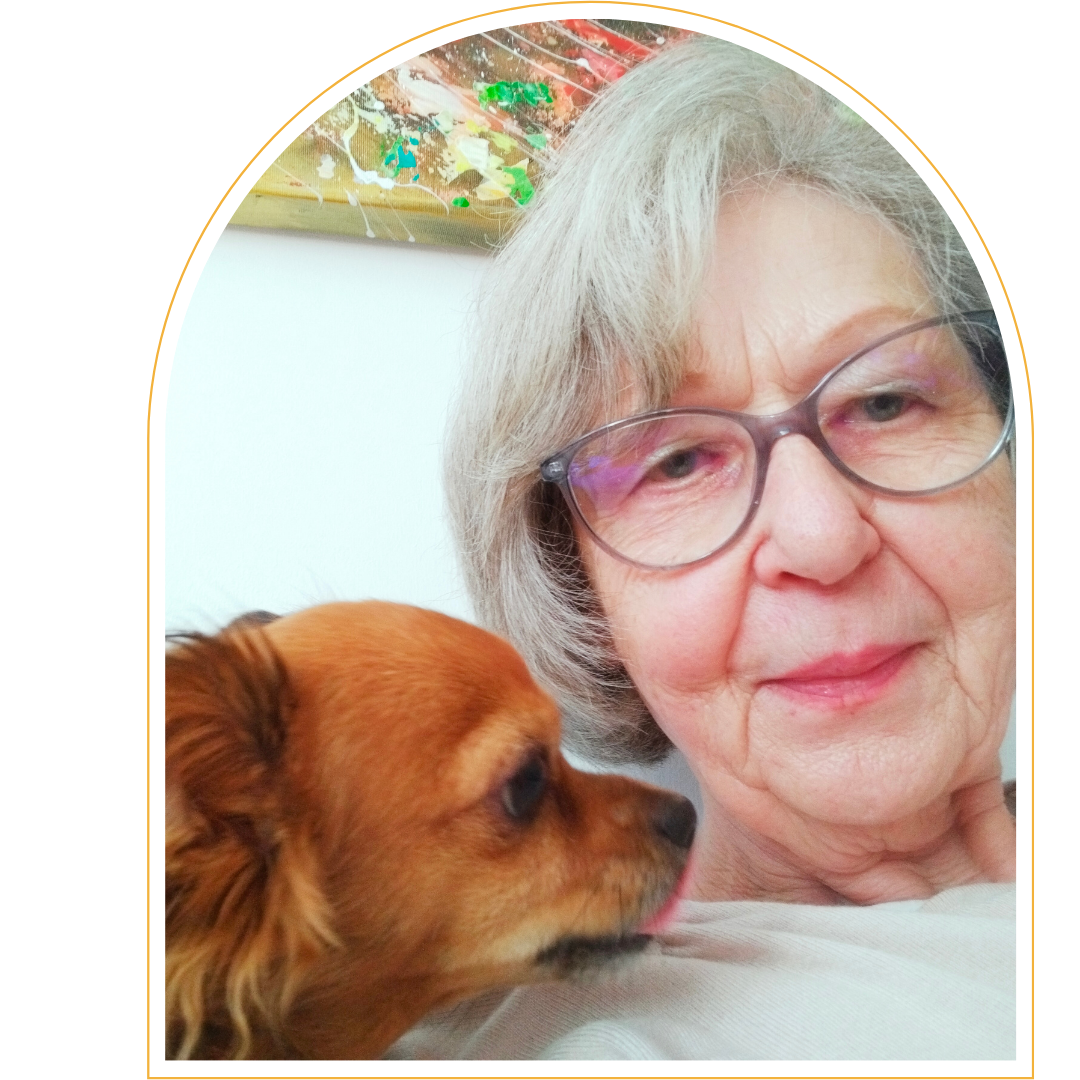
Hi, I am Ingrid Drafta
I am Ingrid and in my work I combine depth psychological Coaching (learned at Jungian Coaching School) with neo-shamanic meditations and talking practices which I studied at the Four Winds Society and the She Rising Academy. As you see here in the texts I like to combine Science and Soul Wisdom.
In our initial session you will gain clarity about how to unfold by my Coaching Program. You will get a first insight into your own emotional place now, and orientation for the development that you desire. This initial session is free, confidential and non-binding.
Start with an initial coaching session.
Blossomed: What Clients Appreciate
There will be joy and selfconfidence in your life
My clients and fellow travelers in the Talking Circles and meditations have become calmer. Their emotions flow in greater harmony. Because we have learned to find new direction through our feelings with compassion, we no longer allow ourselves to be thrown off course by the moods and whims of others. We feel freer and choose our relationships more carefully. We begin to choose—and to become—the women we want to be.
“More than anything, I value the sense of peace I have found. I live without constant anxiety and know that I can trust myself. I no longer let myself be infected by haste and panic; instead, I set healthy boundaries. As a result, my life has become more precious.”
I continue to feel compassion for others, but I don't lose myself in it. I neither fall into co-dependence nor take on someone else's feelings. My conscience has become calm because I have learned to deal with my emotions in an accepting and transformative way.
Today I treat myself to what I can afford. Give and take are in balance. I bought a horse and moved to the sea. I made dreams come true. And I have found my purpose in this life. This is simply wonderful.
Get in Contact with me!

Phone
+49 (0) 177-3333661

